
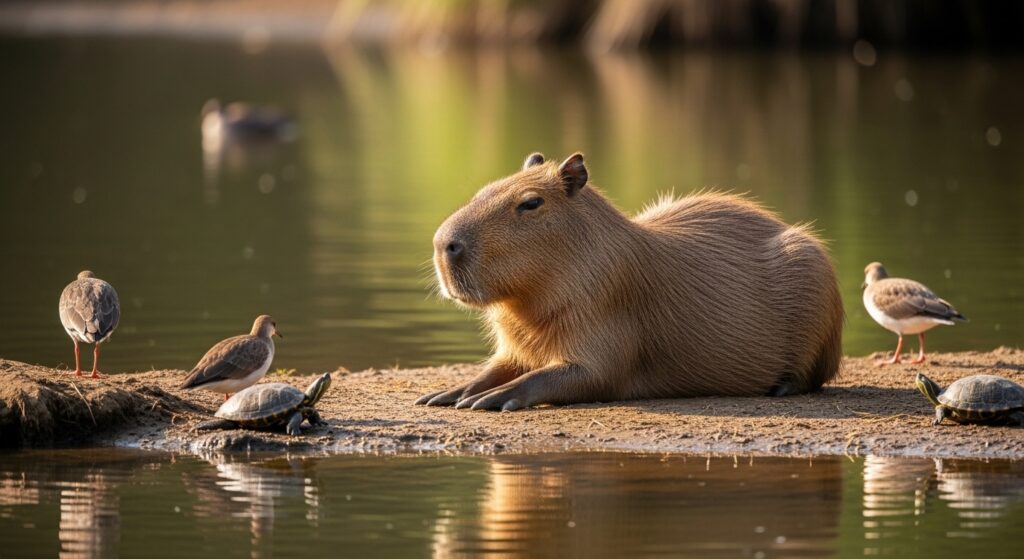

If you’ve searched for “cadibara” online, you were probably looking for the capybara — the world’s largest living rodent. This semi-aquatic mammal from South America has become an internet superstar thanks to its calm personality, adorable appearance, and ability to befriend almost any animal. From viral memes to plush toys in major stores, this peaceful creature has captured hearts globally.
But there’s much more to the cadibara than cute photos and funny videos. Scientifically known as Hydrochoerus hydrochaeris, this fascinating animal plays an important ecological role in wetlands and river systems. It thrives in groups, communicates in unique ways, and has impressive swimming skills that help it survive in the wild.
In this detailed guide, you’ll learn everything about the cadibara — from habitat and diet to lifespan and viral fame. Whether you’re curious about wildlife or simply love adorable animals, this article will give you a deeper appreciation for this gentle giant.
What Is a Cadibara? Understanding the World’s Largest Rodent
The cadibara, more accurately spelled capybara, belongs to the rodent family. Unlike small rodents like hamsters or squirrels, this species can grow over four feet long and weigh more than 140 pounds. That makes it officially the largest rodent on Earth. Its barrel-shaped body, short legs, and slightly webbed feet make it perfectly adapted for life near water.
Native to South America, these animals are commonly found in countries like Brazil, Colombia, Venezuela, and Argentina. They prefer areas close to rivers, lakes, marshes, and wetlands. Water is essential for their survival because it helps them regulate body temperature and escape predators.
Despite their size, they are incredibly gentle. Many wildlife experts describe them as calm, social, and tolerant. This easygoing temperament is a big reason why they’ve gained massive popularity online.
Natural Habitat: Where the Cadibara Thrives
The cadibara thrives in tropical and subtropical regions of South America. It is especially common in the wetlands of Brazil’s Pantanal, one of the largest tropical wetland areas in the world. These environments provide abundant grasses and fresh water, which are crucial for their survival.
They are semi-aquatic animals, meaning they spend a lot of time both on land and in water. When temperatures rise, they cool off by submerging themselves in rivers or ponds. They can even hold their breath underwater for up to five minutes, which helps them hide from predators like jaguars and caimans.
Access to water is not optional for them — it’s a necessity. Without nearby water sources, they struggle to regulate body heat and protect themselves from threats. This close relationship with aquatic environments makes them unique among rodents.
Social Life and Behavior of the Cadibara
One of the most fascinating things about the cadibara is its highly social nature. These animals live in groups that can range from 10 to 30 individuals. During the dry season, when water becomes scarce, group sizes may grow even larger as they gather around remaining water sources.
Their social structure typically includes a dominant male, several females, young offspring, and subordinate males. They communicate using a variety of sounds, including whistles, barks, purrs, and clicks. These vocalizations help maintain group cohesion and warn others of danger.
Interestingly, they are known for forming peaceful relationships with other species. Birds often perch on their backs to eat ticks, and they are frequently seen resting near monkeys, turtles, and even predators when no immediate threat is present. This remarkable tolerance contributes to their “chill” reputation online.
Diet and Daily Feeding Habits
The cadibara is a strict herbivore, meaning it eats only plant-based foods. Its diet mainly consists of grasses, aquatic plants, fruits, and tree bark. In fact, grasses make up the majority of its daily intake, which can reach up to eight pounds per day for a fully grown adult.
Like many herbivores, it practices a behavior called coprophagy, which means re-eating its own feces to extract maximum nutrients. While this may sound unpleasant, it’s a normal and essential process that allows them to absorb more protein and vitamins from tough plant materials.
Their teeth grow continuously throughout their lives. This adaptation is necessary because constant grazing naturally wears down their teeth. The tough grasses they consume help maintain proper tooth length and health.
Lifespan, Size, and Physical Characteristics
Below is a helpful table summarizing key biological data about this species:
| Feature | Details |
|---|---|
| Scientific Name | Hydrochoerus hydrochaeris |
| Average Length | 3.5 – 4.4 feet (106 – 134 cm) |
| Average Weight | 77 – 146 pounds (35 – 66 kg) |
| Lifespan (Wild) | 8 – 10 years |
| Lifespan (Captivity) | Up to 12 years |
| Diet | Herbivore (grasses, aquatic plants) |
| Conservation Status | Least Concern (IUCN) |
Physically, they have coarse brown fur, small ears, and eyes positioned high on their heads. This feature allows them to stay mostly submerged while keeping watch for predators. Their slightly webbed feet make them strong swimmers, and their sturdy build helps them navigate muddy terrain.
Although they appear bulky, they can run surprisingly fast when threatened. However, their first instinct is usually to head for water rather than engage in confrontation.
Why the Cadibara Became an Internet Sensation
The cadibara’s rise to internet fame didn’t happen by accident. Social media platforms have amplified countless videos showing them calmly sitting in hot springs, lounging with ducks, or peacefully interacting with other animals. Their relaxed expressions and friendly behavior make them incredibly meme-worthy.
In Japan, capybaras became especially famous for soaking in hot springs at zoos during winter. Photos and videos of these spa-like moments went viral worldwide, further increasing global fascination with the species.
Their reputation as “the friendliest animal” has turned them into symbols of peace and relaxation. In a fast-paced digital world, people find comfort in watching an animal that appears completely unbothered by chaos.
Popular Cadibara Plush Toys and Merchandise
Because of their viral popularity, many retailers now offer plush versions of the cadibara. These stuffed toys range from realistic designs to cute cartoon-style versions. Here are some popular options:
- Build-A-Bear Workshop offers customizable plush versions, typically priced around $32.
- Target sells a soft 10-inch version under its Gigglescape line for about $10.
- Wild Republic produces a 12-inch realistic plush design priced near $22.
- Walmart features a whimsical backpack-themed plush around $11.
These products show how a wild South American rodent has become a beloved global brand icon. Plush toys, hoodies, mugs, and phone cases featuring this animal are widely available online.
Is It Safe to Interact with a Cadibara?
Although they appear extremely friendly, it’s important to remember that the cadibara is still a wild animal. In some regions, they may tolerate human presence, but they are not domesticated pets. Handling them without proper knowledge can cause stress or defensive behavior.
They can also carry ticks and parasites, which may pose health risks. Wildlife experts recommend observing them from a safe distance in natural habitats or accredited zoos rather than attempting close contact in the wild.
In certain countries, private ownership is legal under strict regulations, but this is not common and requires proper facilities with water access. These animals need space, companionship, and specialized care to thrive.
Conclusion
The cadibara, better known as the capybara, is far more than an internet meme. As the largest living rodent, it plays a vital role in South American ecosystems while showcasing remarkable social intelligence and calm behavior. From thriving in wetlands to forming peaceful bonds with other animals, it represents harmony in the wild.
Its viral fame has introduced millions of people to wildlife education in a fun and engaging way. Whether you admire it for its gentle personality, ecological importance, or adorable appearance, there’s no denying its unique charm.


