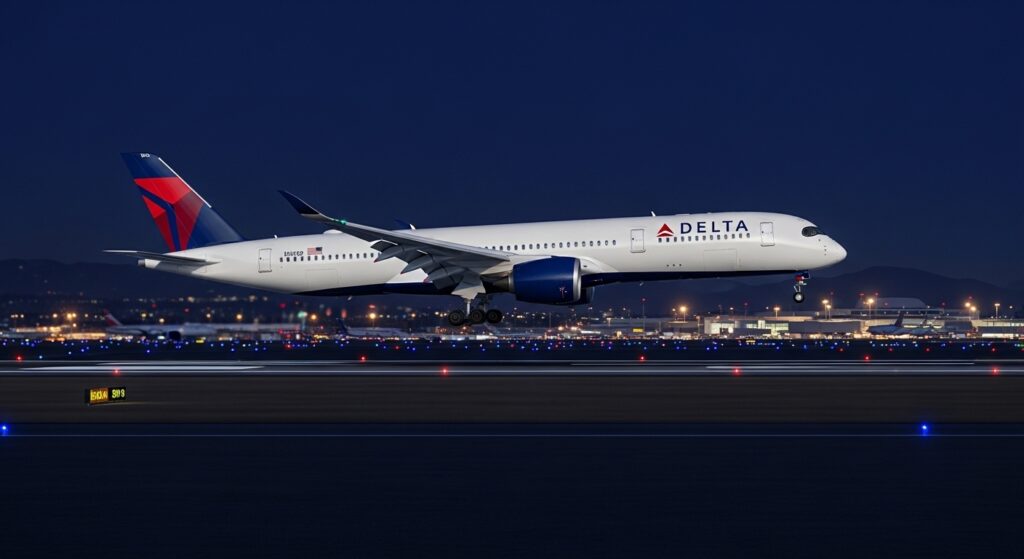

Air travel is one of the safest forms of transportation in the world, yet unexpected technical issues can still occur. Recently, delta flight dl275 diverted lax, drawing attention from aviation enthusiasts, passengers, and industry observers alike. The long-haul international flight, which normally operates between Detroit and Tokyo-Haneda, experienced a technical abnormality mid-air that required a significant change in plans.
The aircraft involved was an Airbus A350-900 cruising at 38,000 feet when the flight crew detected an issue with the anti-ice system of one engine. Although the plane was closer to Alaska at the time, the crew made the decision to divert to Los Angeles International Airport. The aircraft landed safely around 1:00 AM, and Delta Air Lines immediately began assisting affected passengers with rebooking, accommodations, and compensation options.
In this detailed report, we’ll explore what happened, why Los Angeles was chosen, how the aircraft operates safely under such circumstances, and how Delta handled passenger support during the disruption.
Delta Flight DL275 Diverted LAX: What Happened Mid-Air?
The incident began while the aircraft was cruising at 38,000 feet, approximately 620 nautical miles southwest of Anchorage, Alaska. During routine monitoring procedures, the flight crew identified an abnormality in the anti-ice system of one of the engines. Anti-ice systems are critical for preventing ice buildup on engine components during high-altitude flight, especially in colder regions.
When such a system shows irregular behavior, pilots follow strict safety protocols. Even if the aircraft can technically continue flying, safety regulations prioritize caution. The crew assessed the situation carefully, consulted operational support teams, and determined that a diversion was the safest course of action. This proactive decision reflects the aviation industry’s commitment to preventing minor issues from escalating into serious risks.
Rather than declaring an emergency, the flight crew performed a controlled and planned diversion. The aircraft remained stable, and passengers were informed about the situation. The professionalism of the crew played a crucial role in maintaining calm inside the cabin.
Why Delta Flight DL275 Diverted LAX Instead of Landing in Alaska
One of the most discussed aspects of the event was the decision to divert to Los Angeles instead of Anchorage, which was geographically closer at the time. While it might seem unusual, airport selection during diversions involves much more than distance alone.
Los Angeles International Airport (LAX) is one of Delta’s major operational hubs. As a hub airport, LAX has extensive maintenance facilities, highly trained technical teams, and the necessary equipment to inspect and repair advanced aircraft like the Airbus A350-900. Anchorage, while capable, may not have provided the same level of specialized long-haul aircraft support required for a complex engine system inspection.
Additionally, diverting to LAX ensured smoother passenger rebooking options. From Los Angeles, Delta could efficiently reroute travelers to Tokyo or other destinations. Large international hubs offer better logistical flexibility, including spare aircraft availability and crew scheduling options.
Aircraft Overview: Airbus A350-900 and Its Safety Systems
The aircraft involved in this event was an Airbus A350-900, one of the most advanced long-haul jets in commercial aviation. Designed with state-of-the-art materials and fuel-efficient engines, the A350 is built for extended international routes such as Detroit to Tokyo.
Modern aircraft like the A350 are equipped with multiple redundant systems. This means that if one component shows irregular performance, backup systems ensure continued safe operation. The anti-ice system, which became the focal point of this incident, prevents ice formation on critical engine and wing surfaces during high-altitude flight in cold conditions.
Advanced monitoring technology allows pilots and ground operations teams to detect abnormalities early. The decision to divert does not automatically indicate imminent danger; rather, it reflects a layered safety approach. Airlines prefer to address technical issues on the ground rather than risk potential complications later in the journey.
Timeline of the Diversion: From Detection to Safe Landing
The sequence of events unfolded methodically. After identifying the engine anti-ice system irregularity, the crew performed diagnostic checks and evaluated weather conditions, fuel levels, and suitable diversion airports. Air traffic control was informed, and the aircraft gradually altered course toward Los Angeles.
The plane continued flying for several hours after the initial detection. This demonstrates that the issue was managed and controlled, rather than urgent or life-threatening. Throughout the flight, cabin crew updated passengers and ensured normal onboard service continued where possible.
The aircraft eventually landed safely at LAX around 1:00 AM local time. Emergency vehicles were on standby as a precaution, which is standard procedure for many diversions, but there were no reported injuries or further complications upon arrival.
Delta’s Passenger Support and Rebooking Assistance
Following the safe landing, Delta implemented its passenger care protocols to reduce inconvenience for travelers. Long-haul international disruptions can be challenging, particularly for those with connecting flights or time-sensitive travel plans.
Delta responded by offering the following support:
- Rebooking assistance for onward travel to Tokyo-Haneda
- Meal vouchers for affected passengers
- Hotel accommodations for overnight delays
- Communication regarding compensation options for significant delays
Customer service teams worked throughout the night to accommodate travelers. Large hub airports like LAX provide better infrastructure to manage displaced passengers compared to smaller diversion points. By rerouting travelers efficiently, Delta aimed to minimize the disruption’s long-term impact.
Safety Protocols in Long-Haul International Flights
Incidents like this highlight how aviation safety systems function in real-world scenarios. International flights crossing remote areas, including parts of the North Pacific, must follow strict Extended-range Twin-engine Operational Performance Standards (ETOPS). These regulations ensure aircraft can safely operate far from diversion airports.
Before each flight, maintenance teams thoroughly inspect the aircraft. During flight, pilots constantly monitor performance data. If any abnormal reading appears, they evaluate its severity using standardized checklists. Decisions are never made impulsively; they are guided by training, engineering expertise, and real-time communication with airline operations centers.
The fact that the aircraft flew several hours to Los Angeles without escalation underscores the effectiveness of these systems. Diversions are precautionary measures designed to prioritize safety above all else. While inconvenient, they demonstrate that aviation safety protocols are working exactly as intended.
Impact on Travelers and Operational Considerations
For passengers, delays on international routes can be frustrating. Missed connections, altered schedules, and unexpected overnight stays add stress to travel. However, most travelers understand that safety decisions come first, even when plans change.
Operationally, diversions involve complex coordination. Airlines must manage fuel planning, crew duty limits, aircraft inspections, and passenger logistics simultaneously. Maintenance teams at LAX likely conducted a detailed inspection of the affected engine system before determining next steps for the aircraft.
Events like delta flight dl275 diverted lax also generate attention on social media and online forums. While speculation can spread quickly, official airline statements and verified reports help clarify facts. In this case, the safe outcome reinforces confidence in modern aviation procedures.
Lessons from Delta Flight DL275 Diverted LAX
The incident provides valuable insight into how airlines balance safety, logistics, and customer service. Technical anomalies do not automatically translate into emergencies. Instead, they trigger careful evaluation and preventive action.
Choosing Los Angeles over a closer airport highlights strategic decision-making in aviation. Maintenance capabilities, passenger rebooking efficiency, and long-term operational stability all factor into diversion choices. While the route change extended flight time, it ultimately ensured a safer and more manageable outcome.
For passengers, the key takeaway is reassurance. The aviation industry is designed to detect small problems early. When pilots divert, it means safety systems are functioning correctly. In this case, professionalism and preparation resulted in a smooth landing without injuries.
Conclusion
The case of delta flight dl275 diverted lax serves as a clear example of modern aviation safety in action. A routine long-haul journey from Detroit to Tokyo was interrupted due to an engine anti-ice system abnormality detected at cruising altitude. Rather than continuing across the Pacific or opting for the nearest airport, the crew strategically diverted to Los Angeles, a major hub with advanced maintenance capabilities.
The Airbus A350-900 landed safely around 1:00 AM, and Delta Air Lines quickly implemented passenger support measures, including rebooking, meal vouchers, and hotel accommodations. While disruptions are never convenient, this event demonstrates how precautionary decisions protect passengers and crew.
Ultimately, the safe resolution reinforces trust in airline safety protocols, crew training, and operational planning. Diversions may cause temporary inconvenience, but they are powerful reminders that safety remains the aviation industry’s top priority.